







Interest Areas
PINEMAP Aims
Aim 1 - Silviculture/Ecophysiology
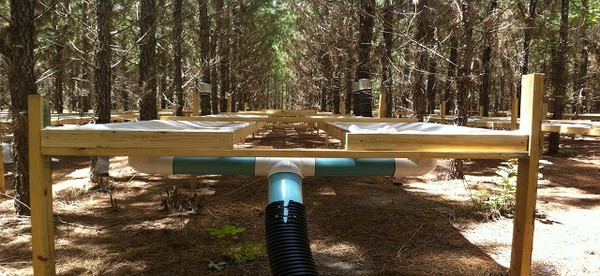
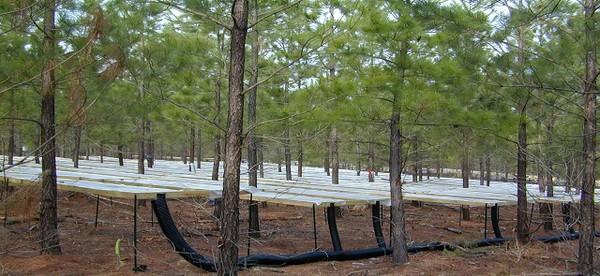
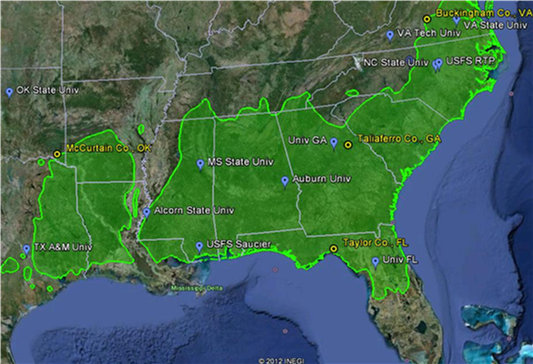
PINEMAP Aim 1 encompasses silviculture (how we grow trees) and ecophysiology (what internal processes control tree growth) research through a network of research sites in the southern United States. Interns might work on projects measuring photosynthesis, soil carbon dioxide emissions, soil fertility and soil water properties. These measurements will then be correlated to growth responses and used in modeling efforts to predict future tree responses to climate change or changes in fertility.
Find out more about the Silviculture Aim.
Aim 2 - Modeling
Researchers in Aim 2 will use data to tailor current models to design and test genetic and forest management systems focusing on greenhouse gas mitigation, plant resource use, and resilience to climate change. As an intern, you may prepare data from existing databases for use with models, model timber growth and yield at stand and watershed scales, or look at how climate change scenarios will affect forests at several spatial scales. Your work will help identify the best practices for managing forests in the face of climate change and/or fertility changes.
Find out more about the Modeling Aim.
Aim 3 - Genetics
The PINEMAP genetics Aim will research how trees adapt to changing climatic conditions and other factors like insect pests on a genetic level. Interns may work in the field to collect tissues from trees for DNA extraction or in a laboratory setting to sequence genetic material. You may be part of a team identifying alleles controlling a variety of responses to environmental factors or creating guidelines for genotypes well-suited to a variety of climatic conditions.
Find out more about the Genetics Aim.
Aim 4 - Economics/Policy
The economics Aim will survey private forest landowners and managers about their forest management decisions, which can be affected by governmental policy and market incentives. Additionally, examining life cycles of forest products, which are a form of carbon sequestration (or storage), allows researchers to identify how ecological functions, goods and services could be interact with management practices. Interns in the economics Aim might assist with developing and examining landowner surveys, conduct economic analyses of forest benefits and services, or you could evaluate interactions among carbon/energy footprints, policy and forest management.
Find out more about the Economics Aim.
Aim 5 - Education
The education team is tasked with, in addition to the Intern Program, creating educational programs for teachers and extension agents that convey the importance of southern forests and climate change impacts. This includes the development of a secondary module about southern conifers and climate change for Project Learning Tree, a popular, award winning educational program. An intern for the education Aim may help create or test exciting activities for secondary students that teach about climate change, forest resources and sustainable products.
Find out more about the Education Aim.
Aim 6 - Extension
PINEMAP Aim 6 exists to demonstrate and distribute knowledge, practices and tools developed by all of PINEMAP’s Aims. Extension foresters will partner with state climatologists to create audience-specific informational materials like fact sheets, videos, and online tools. As an intern, you could be an integral part in developing these materials, or you may help create an open-source support system helping forest landowners and managers make well-informed decisions. Interns in Aim 6 may also be involved in delivering education and training programs to a variety of stakeholders.
Find out more about the Extension Aim.
If you have additional questions, please contact the Intern Program Coordinator.