|
|
- Info
-
4. Alternative parameterization and regional validation of the 3-PG model for Loblolly Pine stands
PDF document
-
C.A. Gonzalez-Benecke, R.O. Teskey, T.A. Martin, E.J. Jokela and J. Yang
The 3-PG model is an extensively applied tool for estimating forest growth. We developed a new set of parameters and functions for loblolly pine. We developed new functions for NPP allocation, biomass, height, canopy cover, effects of frost, tree mortality and the fertility rating, including new specific functions for stands in Uruguay: wood specific gravity, height and biomass partitioning. We used the largest validation dataset ever used for 3-PG, including sites both within and beyond loblolly pine’s native range. We found strong agreement between measurements and model predictions both within and outside of the loblolly pine native range.
-
5. Predicting the effects of climate change on Loblolly Pine plantations across the Southeastern U.S.
PDF document
-
The 3-PG model was used to predict growth under future climate scenarios. Twenty MACA down-scaled climate simulations provided the climate data to run the 3-PG model for 35 actual loblolly pine plantations distributed across the range of loblolly pine. It was previously demonstrated that model had predicted growth well at these sites under the current climate (Gonzalez-Benecke et al. 2016). We found that productivity generally increased under both RCP 4.5 and 8.5 scenarios for rotations in the near future (years 2025 to 2050) and at the end of the century (years 2075 to 2100). However, the relative increment in aboveground biomass was much greater at cooler sites (current mean temperatures between 15 and 18oC) than at warmer sites in the region, i.e., the lower Coastal Plain. In addition, the response to predicted future climates varied with site quality. Plantations with a high Site Index (>25m at age 25) showed very little change in productivity relative to the current baseline climate, and in some cases (warmest sites) exhibited a slight decrease in productivity. This pattern was more pronounced in the RCP 4.5 simulations than those for RCP 8.5, probably due to the compensating effect on growth from the large predicted increase in the atmospheric CO2 concentration in the RCP 8.5 scenario. Net primary productivity, LAI and evapotranspiration followed very similar patterns to that of aboveground biomass in the simulations. We conclude that cooler sites, and lower quality sites, will have greater relative increases in productivity in the future compared to warmer and higher quality sites in the region.
-
7. Exome genotyping and association genetics of environmental adapation and stress mitigation traits in a clonally tested loblolly pine (Pinus taeda L.) population
PDF document
-
M. Lu, K. Krutovsky, C. D. Nelson, T. Koralewski, T.Byram, C. Loopstra
Loblolly pine, Pinus taeda L., is the most widely planted and commercially important tree species in the southeastern U.S. To increase the number of known single nucleotide polymorphisms (SNPs) and functional markers available for research and tree breeding, we used genotyping by sequencing for targeted exome regions. The exons were captured in a population of 375 trees using NimbleGen capture probes and then sequenced using the Illumina HiSeq 2500 platform. Oligonucleotide probes were designed for 199,723 exons (≈49 Mbp) partitioned from the loblolly pine reference genome (PineRefSeq v1.01). Bioinformatics analyses demonstrated that the probes covered 90.2% of the target regions. Capture efficiency analyses showed that an average of 67.2% of the reads from each tree could be mapped to the capture target regions and more than 70% of the captured target bases had at least 10X sequencing depth. A total of 972,720 SNPs were acquired after filtering. Among them, 52.8% were located in coding regions and 5.3% were located in five-prime or three-prime untranslated regions (UTRs). We found that linkage disequilibrium (LD) decays rapidly, with the squared correlation coefficient (r2) between pairs of SNPs within single scaffolds decaying to half maximum (r2=0.22) within 55 bp, to r2=0.1 within 192 bp, and to r2=0.05 within 451 bp. The population structure analysis using unlinked SNPs demonstrated two distinct clusters representing western and eastern parts of the loblolly pine range. Thirty eight loci and eleven SNP-SNP interactions were identified associated with the growth and adaptive traits including height, specific leaf area, carbon isotope discrimination, crown width, nitrogen concentration, diameter, mean branch angle and pitch canker resistance. Our results demonstrate the efficiency of exome capture for genotyping a species with a large, complex genome such as loblolly pine. The significant associated markers can be used to accelerate the selection of better trees.
-
8. Water use efficiency of Loblolly Pine in the Southeastern United States is affected by drought
PDF document
-
W. Lin, A. Noormets, J. King, G. Sun, S. McNulty, J.-C. Domec
As a key parameter in carbon and water cycles of terrestrial ecosystems, water use efficiency is affected by isotopic signatures of the sources, climate, species- and site-specific characteristics such as mesophyll conductance(Barbour et al., 2010) and stand structure (Moreno-Gutierrez et al., 2012). However, the magnitude of their effects and interactions are not well understood. Contributing to 36% of the sequestered forest carbon in the conterminous United States, the southern forests of USA are dominated by loblolly pine plantations. Here we analyzed the δ13C of α-cellulose extracted from latewood (summerwood) of tree rings produced in wet and dry years in 85 sites from southeastern USA in order to understand the response of loblolly pines to drought in terms of intrinsic water use efficiency. Loblolly pine from different geographic regions respond to drought differently. Drought sensitivity correlated broadly with climatic differences and water availability. Following Schmidtling (2001), the study area is divided into 5 regions. The drought sensitivity was the greatest in the southwestern part of the species' range (OK & TX), and smallest in the southwestern part (FL).
-
10. Data mining reveals relationships between soil carbon and environmental factors at Tier 2 sites
PDF document
-
C. W. Ross, S. Grunwald, J. Vogel, A. Bacon, E. J. Jokela, R. Bracho-Garrillo, M. Akers, J. Cucinella, A. Laviner, Daniel Markewitz, Tom Fox, Tim Martin
Soils of the US Southeast are estimated to store between 8.9 and 51.2 Pg carbon, which accounts for more than 1/3 of the total soil carbon storage for the conterminous US when using the median value. This large range is attributed to the highly variable nature of soil carbon in addition to the difficulties associated with applying accurate, yet economically feasible methods to obtain a sufficient number of samples to capture this variance across large geographic regions. Additionally, many of the current soil carbon estimates were derived from highly aggregated datasets, such as SSURGO, with limited sample support. Furthermore, many sampling campaigns do not attempt to characterize soil carbon below the top soil (0-20 cm). The objectives of this study were to i) identify relationships between soil carbon, soil properties, and relevant environmental covariates in forested ecosystems of the US Southeast, ii) improve current estimates of soil carbon stocks to 1m depth and iii) assess the models ability to predict soil carbon without using any measured soil data.
We applied data mining techniques in conjunction with machine learning algorithms (Random Forest) to a large suite of environmental covariates (N ~ 600) across the PINEMAP Tier 2 network. Environmental covariates with high prediction power include, but are not limited to, eco-regions, Major Land Resource Areas (MLRA), geology, biomass, climate data, and soil properties. The best results were achieved by constructing models that use a combination of measured soil properties and a wide variety of publicly available data sources, resulting in an adjusted R2 of 0.93 and 0.49 for training and validation sets, respectively. Random Forest also performed well when using only ancillary data, and resulted in an adjusted R2 of 0.93 and 0.42 for training and validation datasets, respectively.
-
11. Effects of manipulation of soil moisture and fertilizer inputs on needle water potential, shoot hydraulic properites, and root distribution of Loblolly Pine (Pinus taeda L.)
PDF document
-
E. Russell, J. Seiler, C. Maier, Q. Thomas, E. Nilsen
A 2x2 factorial randomized complete block experiment in the piedmont region of Virginia was established to investigate the possible interactive effects of throughfall reduction and fertilizer application in a stand of Loblolly pine. Factor levels were no throughfall reduction versus ~30% reduction, and the addition or omission of one-time fertilizer application. Three years after treatments were imposed, soil cores were collected fr characterization of root density under and between exclusion troughs, pre-dawn and mid-day needle water potential was measured in early and late summer of 2015, and 1-2 year old terminal shoots were collected for characterization of physical and hydraulic properties. Root densities were significantly lower under the troughs, and the proportion of roots present as <2mm was significantly higher under the troughs. Needle water potentials were affected strongly by throughfall exclusion, and were not made significantly more negative by fertilizer in addition to throughfall exclusion. Additionally, although not statistically significant, fertilizer addition tended to lower the daily range of needle water potential. Specific needle area was significantly increased by fertilizer addition only. Shoot hydraulic properties, namely needle area-specific (Kl) and sapwood area-specific (Ks) conductivities were significantly affected by the interaction between fertilizer and throughfall exclusion. Fertilizer only lowered Kl in the absence of throughfall exclusion. Fertilizer lowered Ks with or without throughfall exclusion, but much more so without it. Values of the ratio of Ks:Kl were also significantly affected by the interaction of fertilization and throughfall exclusion. Under exclusion conditions fertilizer lowered the ratio more, largely because while Kl decreased with fertilization without exclusion, it increased with fertilization under drought. These findings, coupled with the lack of significantly more negative mid-day needle water potentials suggests that the use of fertilizer under current exclusion conditions did not imperil the experimental trees.
-
12. Extending PINEMAP tier III to Longleaf Pine: is Longleaf Pine more drought resilient than Loblolly Pine?
PDF document
-
L. Samuelson, T. Stokes, M.l Ramirez, G. Matusik, and M. Elmore
The PINEMAP Tier 3 platform is being extended to longleaf pine (Pinus palustris) in a cooperative study between Auburn University and The Nature Conservancy. Growth and physiological responses of an 11-year-old longleaf pine plantation will be studied in response to a 40% reduction in throughfall. The experiment is located outside of Junction City in Marion County, Georgia (32.553˚ N, -84.476˚ W) on a former agricultural field along the Chattahoochee Fall Line, the boundary between the Piedmont and East Gulf Coastal Plain regions. Soils are Lakeland Series and excessively drained with 0-5% slope. Treatment plots are 0.065 ha in size and range in pre-treatment basal area from 17.4 to 20.8 m2 ha-1 and density from 1077 to 1223 tees ha-1. Given the variability in forest structure among plots, plots were blocked based on basal area. A controlled burn was conducted in winter 2016 and exclusion trays are currently being installed. Sap flow, leaf-level physiology and phenology, leaf area, IPAR, growth and soil carbon fluxes will be monitored. Our goal is to use this new research platform to attract funding to expand the measurements and modeling approaches, increase the number of study sites, and incorporate a factorial density/thinning treatment to better understand the role of density management in enhancing drought resilience in plantation-established longleaf pine.
-
13. Effects of throughfall reduction and fertilization on stem CO2 efflux in a Loblolly Pine (Pinus taeda) plantation
PDF document
-
J. Yang, Y. He, D. P. Aubrey, M. A. McGuire, L. Samuelson, R. O. Teskey
Stem CO2 efflux (ES), the diffusion of CO2 from plant stems to the atmosphere, is an important component in regional and global carbon cycles. Historically, ES was considered a direct measure of stem respiration as it was assumed that ES represented the respiratory activity of local phloem, cambium, and ray cells; however, it is now accepted that it also incorporates some of the respiratory activity of cells located below the point of measurement, including those of roots and omits some of the locally produced CO2 that remains within the stem. Intensive management and predicted declines in precipitation are likely to affect the carbon budgets of loblolly pine (Pinus taeda) plantations in the southeastern United States. However, little is known about how ES responds to decreasing soil moisture and changes in soil fertility. This was examined from 2014 to 2015 in an experiment in a loblolly pine plantation in Washington, GA. The experimental design was a 2 × 2 factorial combination of fertilization (2 levels) and precipitation (throughfall exclusion, 2 levels) replicated in four blocks. We measured ES, leaf area index, sap flow, and root CO2 efflux along with stem temperature soil. We also measured annual diameter increment. Our objectives were to (1) quantify impacts of throughfall exclusion and fertilization on ES, and (2) determine physical and biological controlling factor of ES.
-
14. Effect of climate change and forest management on wood mass loss in Southeastern US Loblolly Pine forests
PDF document
-
Y. Zhang, J. Vogel, R. Will and J. West
Wood debris is an important C pool in forest ecosystems. Understanding the response of wood decomposition to climate change is necessary for studying forest soil carbon cycling. The productivity of managed pine forests in the southeastern US has been improved in part through nutrient management over the past 50 years. Although significant uncertainty exists, climate change may drive a reduction of rainfall of 10%-30% by 2080 for the region. In managed forests that undergo periodic harvesting, the forest can become a source of C when decomposer activity increases C loss from residual wood. We analyzed wood decomposition in response to fertilization, reduced precipitation, location, time, and sites. Our results showed that fertilization stimulated wood decomposition in OK site but tended to inhibited wood decomposition at the FL site with the positive effect on mass loss of woods with termites tunnels. In FL and OK, wood mass by Macro-invertebrates was much higher compared to GA and VA. Interestingly, we found fertilization reduced mass loss of woods with macro-invertebrates’ tunnels in FL but increased mass loss of woods with macro-invertebrates’ tunnels in OK. Our data indicated that in OK future drought would cause slower substrate decomposition but higher substrate mass loss by fertilization. In FL, fertilization may cause lower substrate. Higher woody mass loss and percentage of tunneled wood in FL compared to OK, GA and VA may be explained by higher temperature and precipitation. The temperature response of the relationship of sticks attacked by macro-invertebrates had a greater intercept than microbial-only decomposed sticks, suggesting that response of macro-invertebrates to climate and fertilization needs to be included in ecosystem carbon models.
-
15. Assessing user interactions with the PINEMAP DSS through eye tracking
PDF document
-
As part of the iterative development process for the PINEMAP Decision Support System, DSS developers at the State Climate Office of North Carolina partnered with researchers from NC State University's Geocognition and Geoscience Education Research Group to administer an eye tracking study of the DSS at a recent forestry conference. Study participants worked through tasks and questions related to three DSS tools while having their pupil movements tracked, which helped identify areas of the page being viewed or missed most frequently by a key sample of the target audience. Based on these results, five key changes were made to the DSS design and functionality to make important information and options easier to read and locate.
-
17. Integrating communicty outreach into an undergraduate forest resources communications course
PDF document
-
J. B. Kidd and J. R. Seiler
High quality communication skills are critical for graduates of natural resource programs, and some undergraduate curricula are being adjusted to support emphasis on society-ready students. Despite being a metric of positive outcomes claimed by undergraduate research programs, little attention in undergraduate research literature has been given to outcomes from formal communication to peers and lay audiences. The PINEMAP Undergraduate Research Fellowship is a unique forest resources program where undergraduates conduct research at PINEMAP institutions for 12 weeks during the summer before participating in a fall online independent study course, Effective Communication Skills. The course includes two major components: 1) development and delivery of lesson on forest resources targeting public secondary school classes and 2) development of scientific research communications (i.e., abstract, poster, and oral presentation) targeted to academic audiences. Fellows are required to deliver their science lesson to 10 public secondary school classes during the semester as a form of community engagement. Course evaluation includes a pre-post format survey on public speaking apprehension and an end of semester course evaluation. Since 2012, 38 fellows delivered a total of 335 presentations at 84 schools to 115 educators and 7,315 students in grades 6-12 across the US. The public speaking apprehension survey indicated that course participation significantly decreased students’ (n = 22) apprehension by 16 points (p <.0001). End of course evaluations suggest student improvement in oral and written communication skills as well as a greater ability to think creatively. Integrating this type of coursework into a curriculum may be a step toward producing undergraduates prepared to effectively discuss natural resources with a variety of audiences.
-
18. Economic efficiency of Loblolly Pine forests under changing climactic conditions
PDF document
-
A. Susaeta, D. Adams, D. Carter, C. Gonzalez-Benecke, P. Dwivedi
Forest ecosystem services (ES) provide significant value to society. Without means to adequately capture that value, societal ES values have little influence on landowners’ management decisions, leading to inefficiencies in forest-based ES provision. To understand these inefficiencies, we employ data envelopment analysis (DEA) to assess total profit effciiency forests using loblolly pine (Pinus taeda L.) in the Southern US as an example. Field data from n = 28 plots are used to assess stand-level efficiency in the production of timber, carbon sequestration, and species richness considering inputs such as site index, age and number of trees, precipitation and temperatures. Given the impacts of climate change on key inputs, we also assess efficiency under climate scenarios representing moderate (RCP4.5) and high (RCP8.5) greenhouse gas emissions pathways. We find that 75% are total profit efficient. With climate change, profit efficiency remains similar to the initial conditions, and total profit substantially increases (42.8% and 45.6% for RCP4.5 and RCP8.5). These findings highlight the increasingly important role that forests play in providing socially valuable ES.
-
19. Shortleaf Pine: a resurgent opportunity in a changing climate
PDF document
-
J. Hastings and M. Megalos
Shortleaf pine, blessed with fire and drought tolerance, is one of the South’s most resilient pine species. Facing a warmer, drier south and eastern landscape, shortleaf pine may offer the best hope of matching ownership objectives and risk–avoidance. Shortleaf pine is already dominant in xeric, water-stressed, and rocky sites, thereby yielding a competitive advantage over other ecosystem cohorts. Its willingness to grow on many different site and soil types may provide an additional advantage under projected temperature increases and irregular rainfall patterns, which loom as the chief threats facing southern forests. To examine climate projections, we combined average changes from twenty global climate models to compare future time periods to the past. Our approach highlights the extent of changing temperature and rainfall patterns and our results suggest (1) temperature is expected to increase in every part of the southeast in the near-future, and (2) rainfall and storm events will occur less often but will be more intense when they do occur. The combination of temperature and precipitation will likely cause unprecedented drought and wildfire activity, some of which may lead to increase mortality and loss in currently dominant forest species. Should hot and dry conditions dominate the future climate, managing for shortleaf pine offers a resilient solution for these extreme conditions because of its fire and drought tolerance. This poster highlights expected climate effects and possible areas where expanding shortleaf utility can be beneficial and successful.
-
20. Are your pines at risk? Mapping the future
PDF document
-
J. Hastings and M. Megalos
Loblolly pine (Pinus taeda) is the Southeast’s most important commercial pine species, occupying over 29 million acres. While the $90 billion forest product manufacturing industry is critically important to the regional economy, climate change now and in the future is a direct threat to the well-being of millions of people employed by the industry. Specifically, erratic weather and warming temperatures may require landowners to revisit their current management strategies or utilize a new approach. We forecasted changes through a sample of models and presented them in simple maps using the gardener-friendly plant hardiness zone colors to show change over time. The results show a northward shift of each plant hardiness zones. A positive effect of shifting plant hardiness zones is loblolly pine range expansion and an opportunity to plant more southern families/cultivars to capture growth and improve health and profits. However, the northward trend of plant hardiness zones could also introduce problems that may require expensive solutions. For example, invasive plant and insect outbreaks in the past have shown that as temperature rises, more areas become suitable habitat for invasives. Compounding these issues are future patterns of rainfall and the risk of drought. We projected rainfall patterns for two future greenhouse gas trends. Our results show if business as usual continues, rainfall and storm events will occur less often but will be more intense when they do occur. Specifically, summers may see decreased rainfall while winters see increased rainfall. These patterns may exacerbate drought conditions leading to degraded soils, limited water availability/consumption, and elevated risk of wildfire. By introducing new management techniques, such as encouraging rainwater and nutrients to stay on site, loblolly pine production can be used as a resource to restore previously degraded soils and mitigate the effects of climate change. Because these risks are likely to be site-specific, the need for realistic solutions to help landowners adapt may improve management practices such as site preparation, thinning, prescribed fire regimes, rotations, and collecting rainfall more efficiently to foster species sustainability in a changing climate.
-
21. Women landowners and climate change workshops 2016 in the Southeastern region
PDF document
-
J. Idassi, M. Megalos, E. Taylor, and J. Shola
PINEMAP in partnership with other collaborators (i.e.., the high learning institutions, State and Federal Agencies and Non Profit Organizations) in Texas and South Carolina) organized two successful workshops targeting small scale and socially disadvantaged women farmers and woodland owners. A total of sixty women landowners participated in these workshops.
In average, seventy-six percent of participants were 50 years old and above, 16% were between 40-50 years, while two participants, representing 8% were between 30-40 years of age. Sixty-eight percent of participants had owned lands ranging from 4 to 40 years while the remaining 32% indicated that their land has been in family possession for between 70 and 216 years. Hundred percent of landowners indicated to be very satisfied with the relevance of information provided; presentation quality of instructors and overall quality of information presented. When asked how satisfied participants were about logistics, 89% of participants were very satisfied, 4% were satisfied while 7% indicated to be somewhat satisfied. Furthermore, when asked if the workshop met their expectations, 96% of participants indicated that their expectations were met.
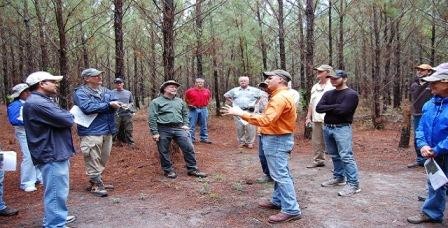
Participants were further asked to evaluate different sessions such as ‘Forest land Management and Environmental Stressors” and “Forest Fires: Economic, Cultural and Ecological benefits of prescribed burning”. Responses on the two sessions show that 100% of participants held that the sessions were very valuable. On “Basic tax information” and “Timber sales and Timber Price trends”, 96% of participants indicated that both sessions were very valuable while 4% held that it was valuable. The session on “Available USDA Financial Assistance Programs” was held to be very valuable by all participants. Ninety-five percent of participants also responded positively that the field tours were very valuable. Especially on prescribed burning demonstration for the Nacogdoches, Texas, loblolly pine site. To some the hands-on experience was an eye opener to what they can do for the care and maintenance of their loblolly pine forestlands. Participants also indicated what they like most about the workshop in which responses were overwhelming in support of the workshop as follows: A participant appreciate the ‘genuine spirit of the presenters, and held that the workshop was well organized’; ‘Knowledgeable authority of presenters especially from the University Institutions and Community Collaborators. Participants mentioned Mr. Sam Cook, from the Center of Heir Property, in SC for his positive energy and optimism on the State of Women Land owners in Southeastern region. Other topics of interest that were written in the comment section of the evaluation included: ‘All of the information that was shared with the participants’; ‘The personal stories about family, property and historical ties’; ‘Great speakers, great planning, great moderation’; ‘The choice of topics and the interaction between participants.
What did they say: “I loved the field trips’ said one participant; Other participants commented that: “they liked the wide range of topics and information presented”; “the availability of speakers throughout workshop duration was incredible’; “going on to the field tour was a great activity’ and also, “the knowledge base of the speakers was awesome.”
When asked what participants liked least, some wanted to be given time to sit one on one with presenters. Another participant held that the temperature of the room was too low for her. A participant want more time for each sessions, two participants want improvement on the food while yet another participant indicated that the workshop was great and it was one of the best she had ever attended. For future workshops, many of the participants want the younger generation to be involved in learning what they were privileged to learn.
|
-
May
| Mo | Tu | We | Th | Fr | Sa | Su |
|---|
| | | | 1 | 2 | 3 |
| 4 | 5 | 6 | 7 | 8 | 9 | 10 |
| 11 | 12 | 13 | 14 | 15 | 16 | 17 |
| 18 | 19 | 20 | 21 | 22 | 23 | 24 |
| 25 | 26 | 27 | 28 | 29 | 30 | 31 |
|







 PINEMAP Intranet Site